




Getting a carrier on is one thing. Getting it fitted correctly is another. These five checks take less than a minute once you know them. They apply every time you carry, at every age and stage.
If you are new to babywearing, bookmark this page. If you have been doing it for a while, it is still worth running through occasionally. Fit changes as your baby grows, and habits can drift.
1. Is the panel the right size for your baby?
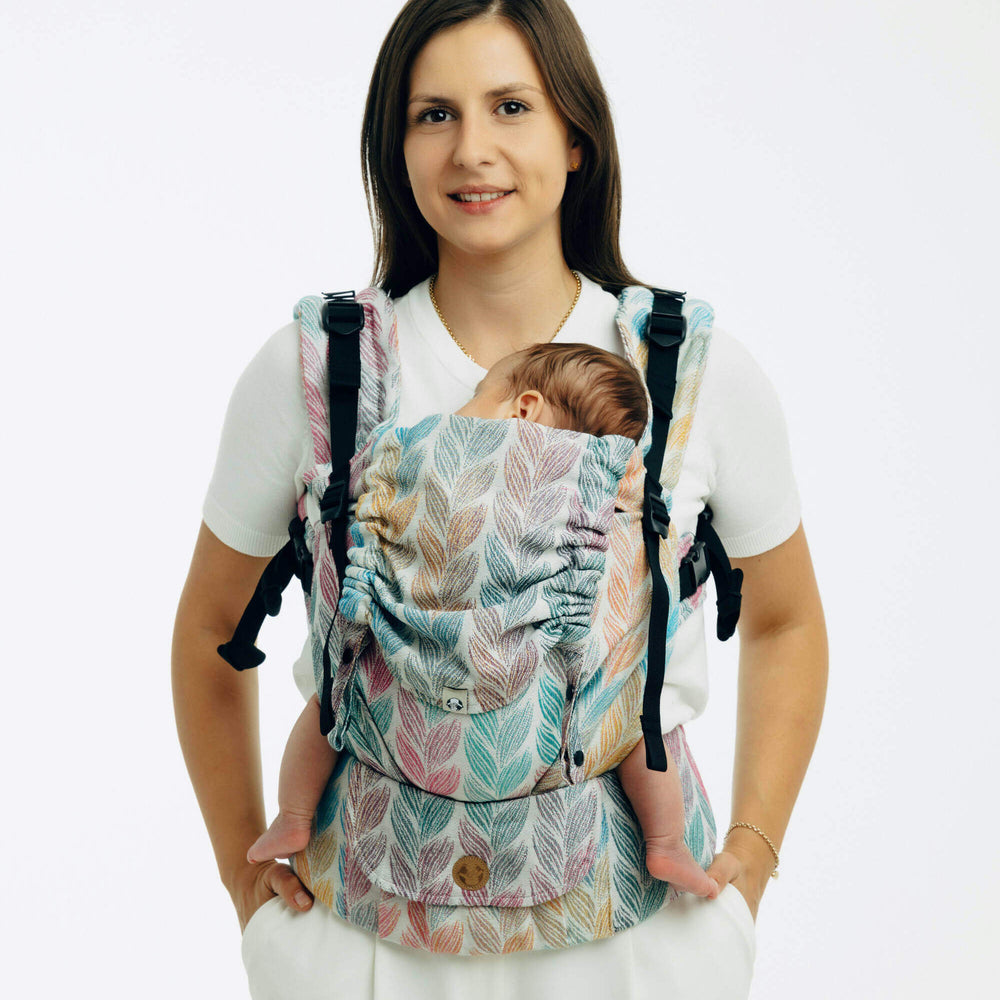
The carrier panel (the fabric that sits over your baby's body) needs to fit your baby's current size, not their eventual size or their weight.
For the width: The panel should reach from knee to knee without pushing into the back of your baby's calves. If it is too wide, the legs are pushed outward rather than supported in a natural position with the knees higher than the bottom (sometimes called the M position or seat position).
For the height: Unless your baby has excellent head and neck control (which usually happens at around four months of age) the carrier support your baby's shoulers and neck, but not higher than the base of their earlobes.
If your baby has strong heck and neck control, the top of the panel should sit between your baby's armpits and the base of their earlobes. No lower than the armpits, and no higher than the base of the earlobes.
If your baby falls asleep in the carrier, their muscle tone drops. At that point, if they have their arms out you should pop one or both arms back inside the panel so they are supported.
Many carriers have a cinching mechanism to adjust panel width and height for smaller babies. If yours does, use it to get the perfect size for your baby. If the panel is too wide or too tall for your baby and cannot be adjusted, it may not be the right carrier for this stage.
2. Is baby's head resting on the firm part of your chest?
You want to carry your baby high and close - roughly where you would naturally hold them in your arms.
Their head should rest on the flat, firm part of your chest, not on soft breast tissue. This matters for two reasons: it keeps their airway clear and gives their head proper support.
For young babies especially, the easiest way to achieve this is to wear your waistband higher than feels instinctive. As your baby grows and their muscle tone develops, you will gradually lower it.
3. Is your carrier snug but not too snug?
Tension is one of the things new babywearers find hardest to get right, and it is worth taking a moment each time to check.
The test for snug: if you lean forward (while supporting baby's head), your baby should stay against your body without moving away. That is the minimum you are aiming for.
The test for too snug: look at the curve of your baby's spine. It should follow a natural J or C shape. If the carrier is pulling in too tight at the middle of the back, the spine will look more like an upside-down question mark. If you see that, loosen the carrier slightly.
4. Is your baby sitting in the carrier?
This one catches a lot of people out, because from the outside everything can look fine.
What sometimes happens: babies end up sitting on top of the waistband, pinned against the wearer's body, rather than their bottom actually sitting inside the carrier panel. When this happens, the carrier is not doing the work it should and it is hard to maintain a supported spine and M shaped hips.
Think of it like the difference between sitting inside a hammock versus perching on the edge. You want bum down inside the seat, knees up.
A pelvic tuck at the end of getting your carrier on helps with this - scoop baby's bottom down and into the carrier so their knees come up and the seat is properly established.
5. Is your chest strap low enough?
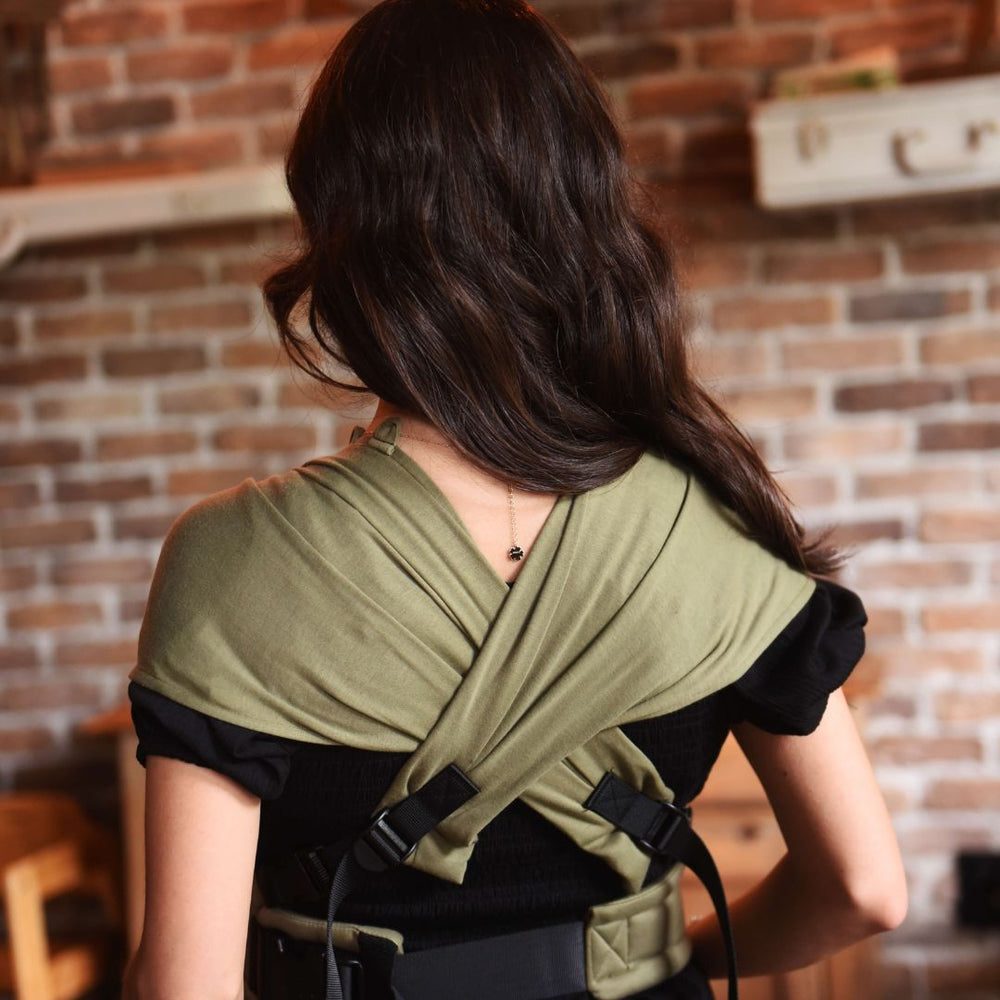
The chest strap (the horizontal strap across your upper back) is almost always worn too high by new babywearers. This is understandable. You put it where you can reach it to clip it, and then leave it there.
The aim is to wear it at roughly armpit level. When it sits too high, the shoulder straps splay outward, dig under your arms and concentrate weight in the wrong places.
Drop it to armpit level and you will usually feel an immediate change. If you are not sure how to get your carrier on and off with the strap in the right position, it is worth getting someone to show you how - after that it becomes second nature.
What if something still feels off?
These five checks will resolve most fit issues. But sometimes a carrier genuinely is not the right match for your body or your baby, and no amount of adjusting will fix that.
If you have run through these checks and something still does not feel right, reach out. No matter where you bought your carrier from, we are happy to help you work through it.
You can book a join our Facebook group for a fit check, or come along to a Babywearing Social Club meet near you. They are free, casual and run by certified babywearing educators across Australia. No experience needed.
Frequently asked questions
How do I know if my baby carrier fits correctly? Run through the five checks above: panel size, head position, carrier tension, baby's seated position and chest strap placement. If all five are right, the carrier should feel comfortable for you and your baby should be in a safe, supported position.
What is the M position in a baby carrier? The M position (sometimes called the spread squat position) refers to how a baby's legs sit in a carrier. When you look at them from the front, their knees should be higher than their bottom with the thighs supported out to the side. This position supports healthy hip development.
How high should a baby sit in a carrier? High enough that you can kiss the top of their head without craning your neck. Their face should be visible at all times and their head close enough to your chin that you could check on them with a glance.
Can I use any carrier from birth? Not all carriers are suitable for newborns, regardless of what the label says. Key things to check: the panel must be adjustable to fit a smaller body (knee to knee width, with the top reaching the base of the earlobe), and the carrier must support the natural C curve of a newborn spine. If in doubt, book a fit check before purchasing.
What does a chest strap do on a baby carrier? The chest strap (the horizontal strap across your upper back) connects the shoulder straps and stops them slipping off your shoulders. It also affects how weight is distributed. Worn too high, it can cause the straps to dig under your arms. At armpit level, it keeps everything in place and distributes weight more evenly.
Kiki is a certified babywearing educator and owner of Cloth and Carry, Australia's biggest online baby carrier store. She runs free Babywearing Social Club meets across Australia and offers free fit checks for parents and carers at any stage of their babywearing journey.









Leave a comment